
French Caribbean: Guadeloupe, Martinique & Saint Martin
The French Caribbean refers to the Caribbean territories that are politically part of France. It primarily includes Guadeloupe, Martinique and Saint Martin which are located in the eastern Caribbean Sea and form part of the Lesser Antilles.
These islands combine Caribbean geography and Creole cultural influences with French governance, language and public institutions. While other French territories such as Saint Barthélemy are sometimes included in broader definitions, Guadeloupe, Martinique and Saint Martin are most consistently associated with the French Caribbean in geographic, political and travel contexts.
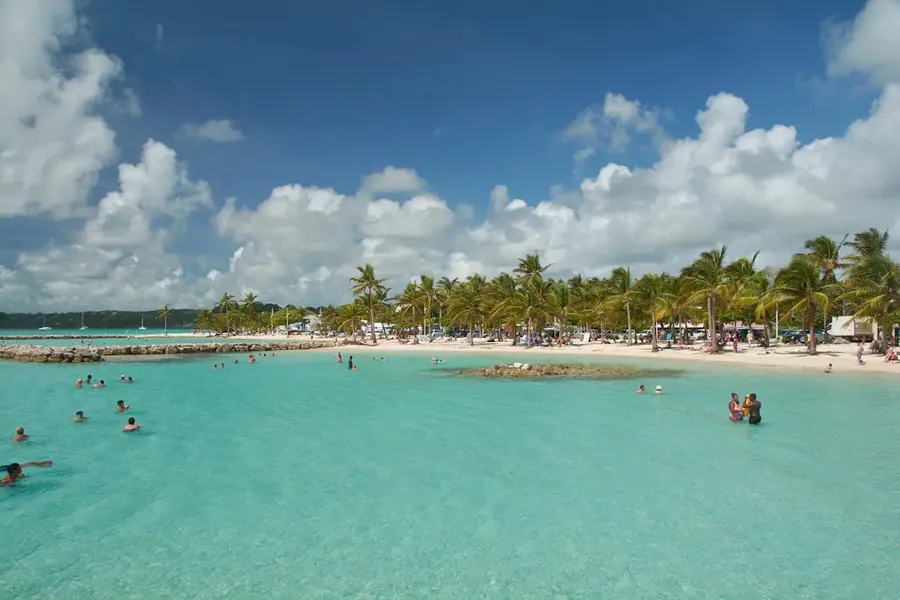
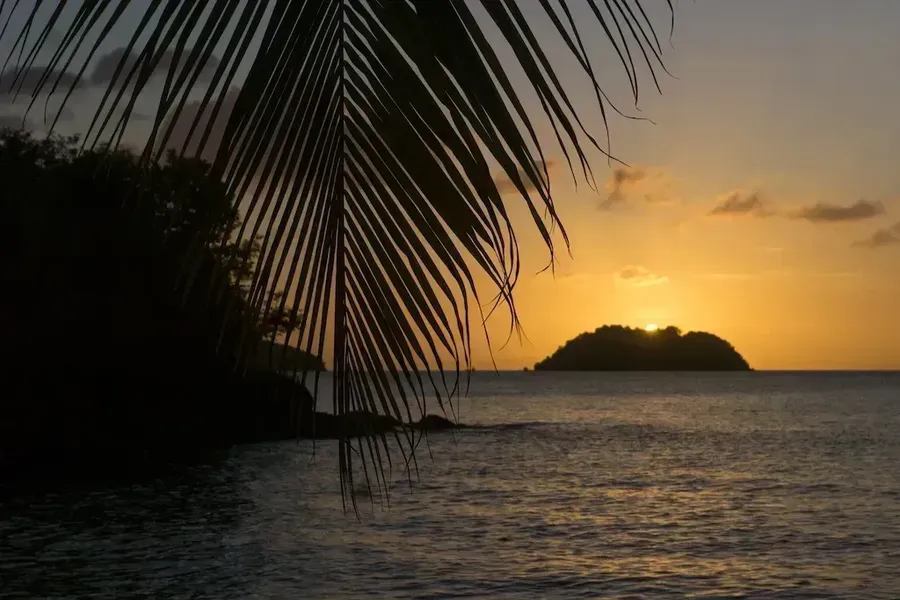
Saint-Anne, Guadeloupe
Political status & EU relationship
Guadeloupe and Martinique are overseas departments of France with the same legal status as regions in mainland France. Saint Martin is an overseas collectivity with a different administrative structure but remains under full French sovereignty.
All three territories follow French law, use the euro (€) and are part of the European Union. Residents hold full EU citizenship and France is responsible for defense, foreign affairs, currency and border control, while local authorities manage regional administration and public services.
As EU territories, the French Caribbean applies European standards for healthcare, infrastructure, consumer protection, labor law and safety, setting it apart from independent Caribbean nations and non-EU overseas territories in the region.
French Caribbean map
The French Caribbean is located in the eastern Caribbean Sea and forms part of the Lesser Antilles island chain. It lies east of Puerto Rico and north of South America within the eastern Caribbean island arc.
Saint Martin is the northernmost of the French Caribbean islands and sits at the top of the Lesser Antilles, where it shares an island with Dutch Sint Maarten. Guadeloupe lies farther south and occupies a central position within the Lesser Antilles, while Martinique is located farther south and marks the southern end of the French Caribbean.
The interactive map above shows how the French Caribbean islands are positioned relative to each other as well as nearby Caribbean islands.
Languages & culture in the French Caribbean
French is the official language throughout the French Caribbean and is used in schools, government and public life. At the same time, Creole languages are spoken daily and play a central role in local identity, social life and cultural expression. English is widely understood, especially on Saint Martin and in tourist areas.
Culturally, the French Caribbean reflects a deep blend of Caribbean and French influences. Daily life is shaped by Creole traditions, music, food and festivals, while institutions, education and public services follow French systems. The result is a region that feels unmistakably Caribbean in rhythm and atmosphere and distinctly French in structure, language and cultural influence.
Guadeloupe
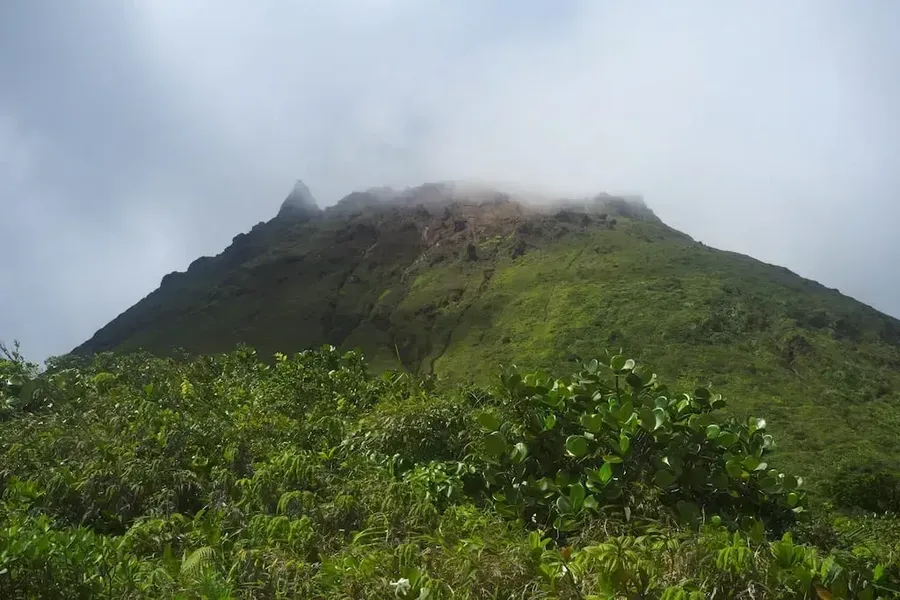
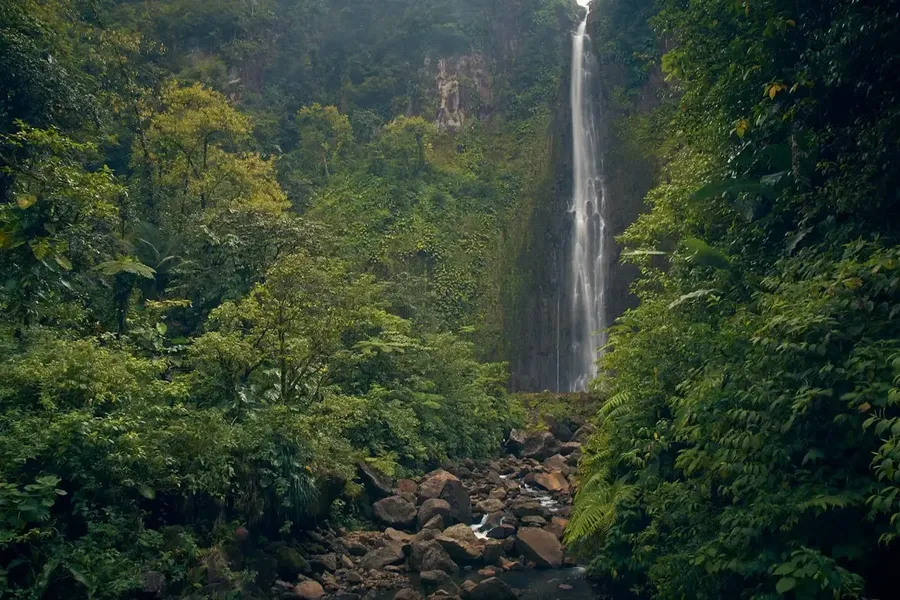
Guadeloupe is a butterfly-shaped archipelago in the French Caribbean made up of two main islands: volcanic Basse-Terre and beach-focused Grande-Terre plus smaller islands such as Marie-Galante, La Désirade, Les Saintes and Petite-Terre. Guadeloupe is known for its mix of rainforest landscapes, beaches and strong Creole culture.
Signature experiences:
- Hike La Soufrière volcano
- Swim at the Carbet Falls
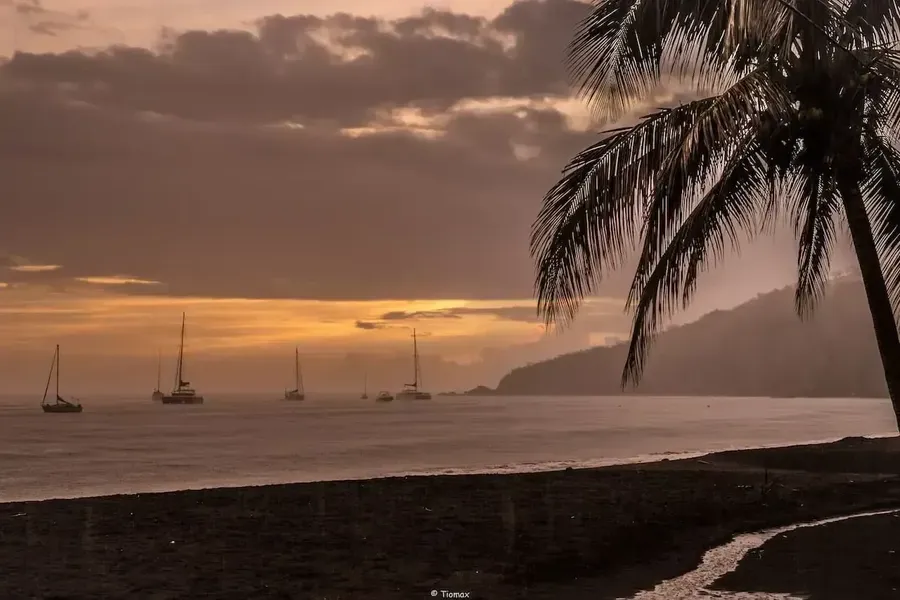
- Visit a black sand beach
Martinique
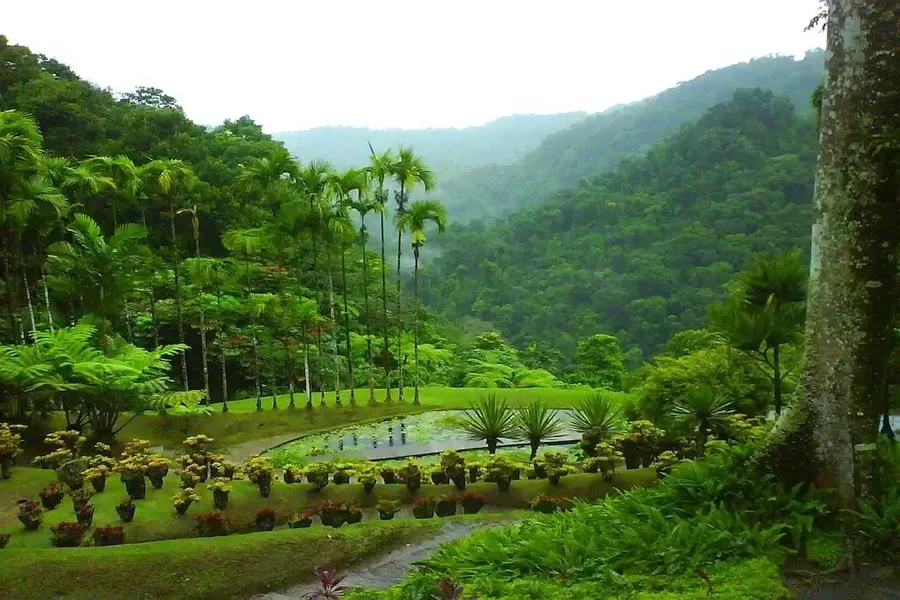
Martinique is a single volcanic island in the French Caribbean dominated by Mount Pelée and known for its mountainous interior, rainforests and long white sand beaches. The island blends strong French influence with deep Creole traditions and a relaxed Caribbean atmosphere.
Signature experiences:
- Explore the rainforest around Mount Pelée
- Visit a rhum agricole distillery
- Relax on the beaches of the south coast
Saint Martin
Saint Martin is the northernmost island of the French Caribbean and occupies the northern half of an island shared with Dutch Sint Maarten. The French side is known for quieter beaches, a relaxed atmosphere and a strong culinary culture centered around the town of Grand Case.
Signature experiences:
- Dine in Grand Case, the culinary center of the island
- Relax on the beaches of the French side
- Explore the open border between the French and Dutch sides
Guadeloupe, Martinique & Saint Martin comparison
Here is a quick comparison between the three main French Caribbean islands.
Feature | Guadeloupe | Martinique | Saint Martin |
|---|---|---|---|
Population | ~374,000 | ~340,000 | ~25,000 |
Landscape | Rainforest, volcanoes, waterfalls | Volcanic mountains, rainforest | Low hills, lagoons |
Beaches | Mixed sand and volcanic beaches | Mostly white sand beaches | Calm, clear-water beaches |
Nightlife | Limited, lowkey | Limited | Lively, especially in Grand Case |
Food scene | Creole cuisine with French influence | Strong French-Caribbean cuisine | Renowned international dining |
Resorts | Small resorts and boutique hotels | Limited resorts, boutique hotels | Wide range of resorts |
Prices | Mid-range | Mid-range | Mid-range to high |
Getting around | Car recommended | Car recommended | Easy taxis, short distances |
French Caribbean climate
The French Caribbean has a tropical climate with warm temperatures throughout the year. Average daytime temperatures typically range between 26 and 30 °C.
The driest and most popular period runs from December to April, when rainfall is lower and humidity is reduced. This period aligns with the peak travel season and generally offers the most stable weather.
From May to November, conditions are warmer and more humid with more frequent short rain showers. This period overlaps with the Atlantic hurricane season, although direct impacts are relatively infrequent compared to other Caribbean regions.
Overall, the French Caribbean can be visited year round, with weather patterns rather than temperature being the main seasonal difference.
Where to stay in the French Caribbean
Accommodation options in the French Caribbean range from beachside resorts, small hotels to locally run guesthouses. Most visitors choose locations that balance beach access dining and easy connections to the main towns and attractions.
Le Gosier area (Guadeloupe)
Le Gosier is the most popular base on Grande-Terre and sits just outside Pointe-à-Pitre, close to the airport. It offers a wide range of resorts, apartments, restaurants and easy access to beaches, while staying well connected to the rest of Guadeloupe.
Best for: Families, beach-focused trips, first-time visitors
Why stay here: Central location, nearby beaches, dining options and easy access to both Basse-Terre and Grande-Terre
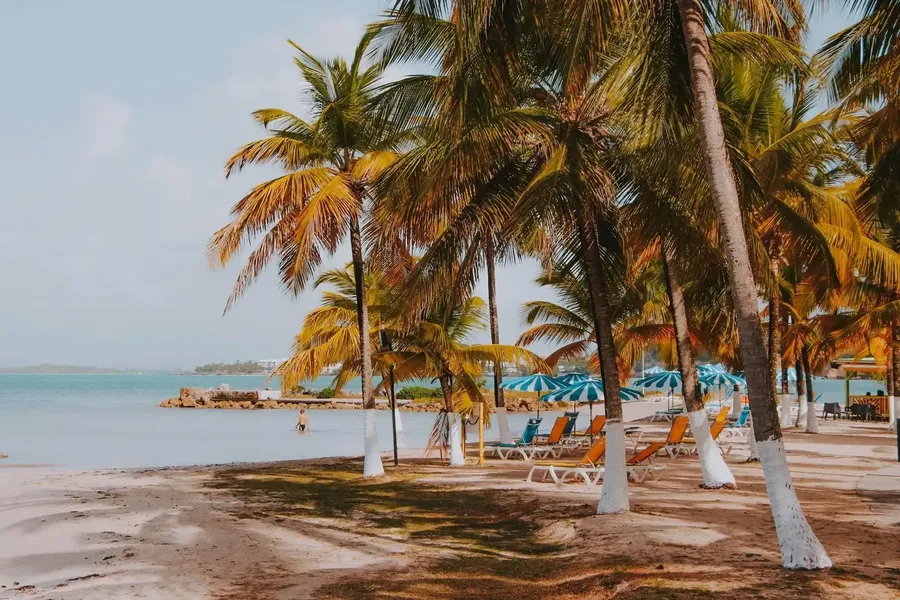
Le Gosier, Guadeloupe
Les Anses-d'Arlet / Le Diamant (Martinique)
Les Anses-d'Arlet and Le Diamant are two of the most popular areas on Martinique’s southwest coast, known for small hotels, villas and a relaxed local atmosphere close to some of the island’s best beaches.
Best for: Couples, nature-focused stays, slower-paced trips
Why stay here: Quiet white sand beaches, coastal villages, views toward Mount Pelée and strong local dining options
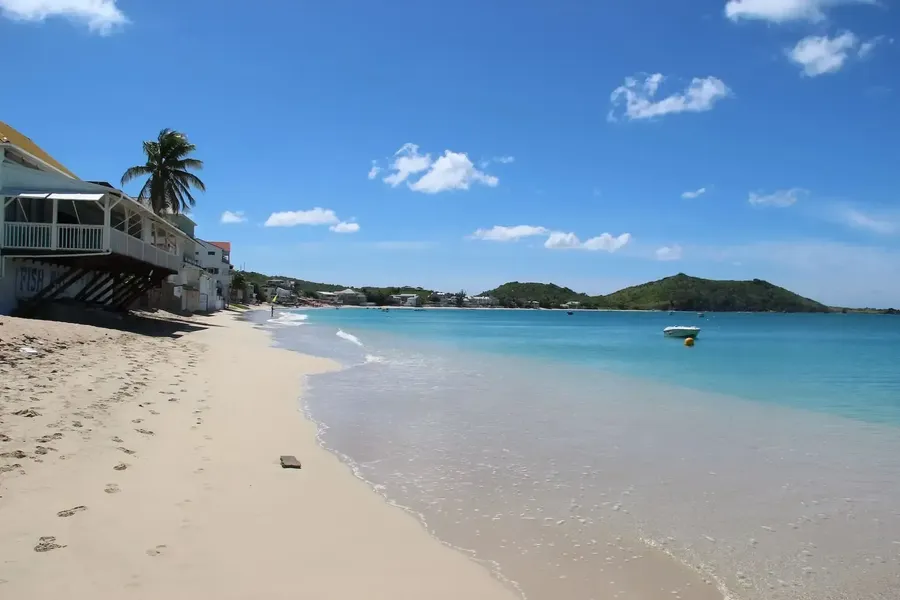
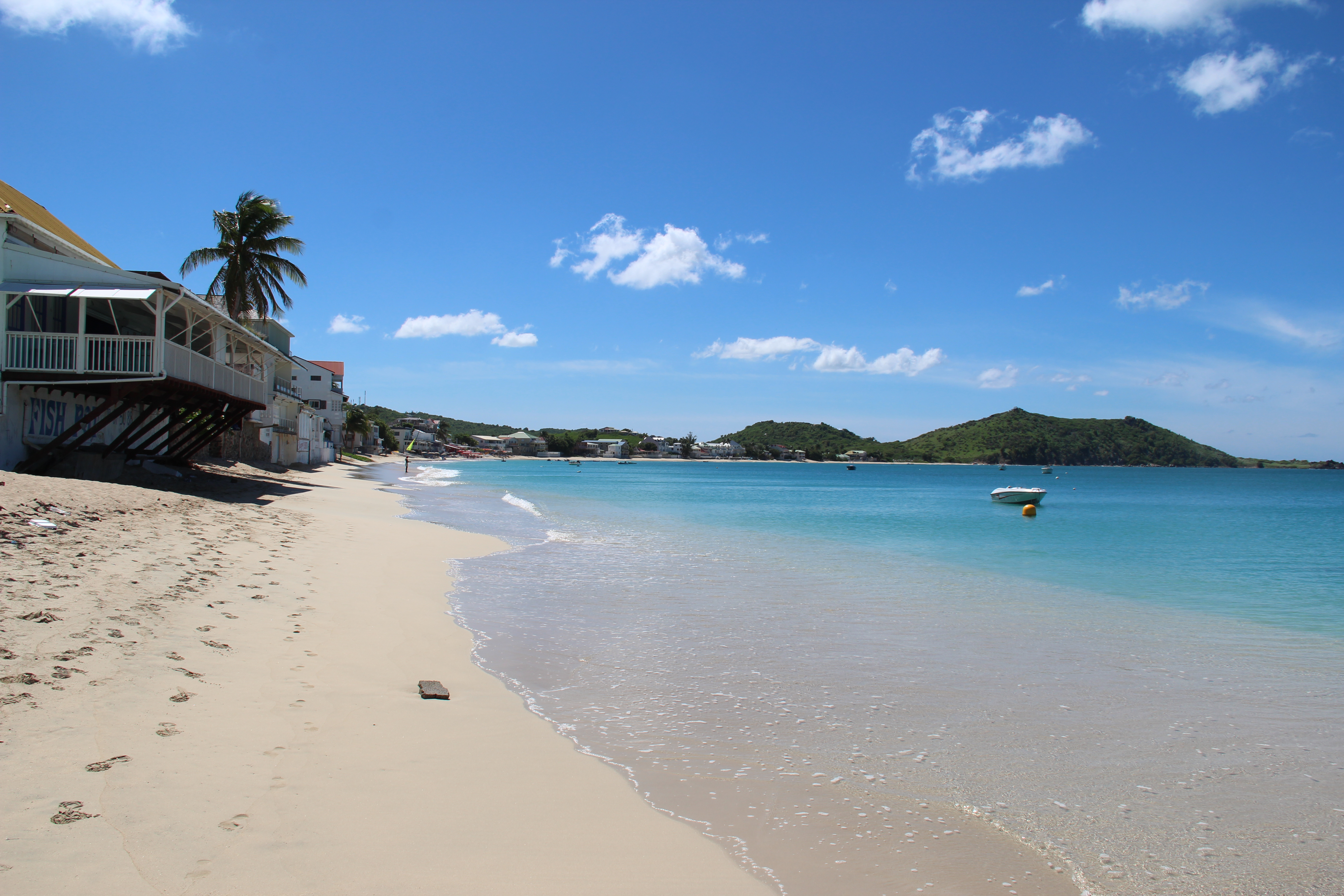
Grand Case (Saint Martin)
Grand Case is the culinary center of the French side of Saint Martin, lined with boutique hotels, guesthouses and upscale villas along a calm beachfront road.
Best for: Food lovers, couples, upscale stays
Why stay here: Renowned restaurants within walking distance, a relaxed village atmosphere and easy access to quiet beaches


Practical information

Currency - Euro (€) is the official currency on all three islands.
Language - French is the official language and English is widely spoken in tourist areas.
Visa - No visa required for stays up to 90 days for most travelers (US, Canada, UK, EU, Australia).
Safety - Among the safer Caribbean regions. Petty theft can occur in crowded areas.
Power outlets - 220 V / 50 Hz, European plugs (Type C/E).
Internet - Reliable Wi-Fi in hotels and good 4G/5G coverage on the main islands.
Health - No special vaccines required and tap water is generally safe in the cities and hotels.
Planning tips & sample itineraries
How long to stay
Seven to ten days works well for one island or a two-island combination. Visiting all three islands in one trip is possible but can feel rushed due to flight schedules.
One island focus (7 days)
- Guadeloupe: Seven nights exploring rainforests, beaches and Creole cuisine
- Martinique: Seven nights driving the island, visiting rum distilleries and hiking volcanic terrain
- Saint Martin: Seven nights focused on dining in Grand Case and beach hopping
Two island combinations (10 days)
- Guadeloupe (5 nights) + Saint Martin (5 nights): Nature and dining mix
- Martinique (5 nights) + Guadeloupe (5 nights): Volcano landscapes and rainforest exploration
All three islands (12–14 days)
Fly into Pointe-à-Pitre, continue to Fort-de-France and finish in Saint Martin. Plan flights around Air France or Air Caraïbes schedules.
Booking tip
For travel between December and April, book flights and accommodation six to nine months in advance. Traveling between May and November offers more flexibility and prices that are often 30 to 50 percent lower.