
Caribbean Netherlands: Bonaire, Sint Eustatius & Saba
The Caribbean Netherlands refers to three islands in the northeastern Caribbean Sea that are special municipalities of the Netherlands: Bonaire, Sint Eustatius and Saba. Together, they are commonly known as the BES islands.
Unlike Aruba and Curaçao, the Caribbean Netherlands are governed directly by the Netherlands and are fully integrated into the Dutch state. Dutch law applies, the US dollar is used as currency and public administration operates under Dutch systems, while the islands remain geographically Caribbean and culturally distinct. Their small size, volcanic landscapes and distinct local cultures set them apart from both independent Caribbean nations and other European overseas territories in the region.
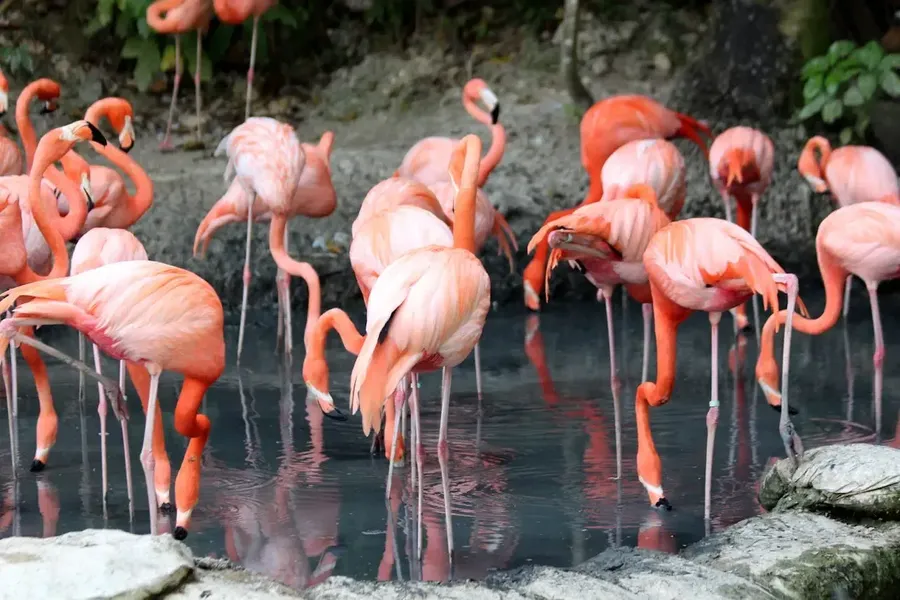
Flamingos, Bonaire
Political status & relationship with the Netherlands
Bonaire, Sint Eustatius and Saba are special municipalities of the Netherlands and are governed directly from the Dutch state. They are fully part of the Netherlands and Dutch law applies across all three islands.
Unlike Aruba and Curaçao, the Caribbean Netherlands do not have autonomous country status or separate national governments. Public services, education and legal systems are administered under Dutch authority, while local island councils manage day-to-day municipal matters.
This governance structure makes the Caribbean Netherlands politically distinct from both independent Caribbean nations and other overseas territories in the region.
Caribbean Netherlands map
The Caribbean Netherlands are located in the northeastern Caribbean Sea and are spread across two distinct areas of the region.
Sint Eustatius and Saba lie in the northern Lesser Antilles near Saint Kitts and Nevis, while Bonaire is located much farther south just off the coast of Venezuela near Aruba and Curaçao. Despite this geographic separation, all three islands share the same political status as part of the Netherlands.
The interactive map above shows where Bonaire, Sint Eustatius and Saba are positioned relative to each other and to nearby Caribbean islands.
Languages & culture in the Caribbean Netherlands
Dutch is the official language in the Caribbean Netherlands and is used in government, education and administration. English is widely spoken on Sint Eustatius and Saba, while Papiamentu is commonly spoken on Bonaire alongside Dutch and English.
Culturally, the islands blend Caribbean traditions with Dutch influence. Daily life reflects Afro-Caribbean heritage, regional history and island-specific customs, while public institutions, education and legal systems follow Dutch models.
Bonaire
Bonaire is the southernmost island of the Caribbean Netherlands and lies just off the coast of Venezuela. It is known for its dry climate, flat terrain and strong emphasis on nature protection, with much of the island designated as marine and terrestrial conservation areas.
Signature characteristics:
- Arid climate with minimal rainfall
- One of the best shore diving spots in the world
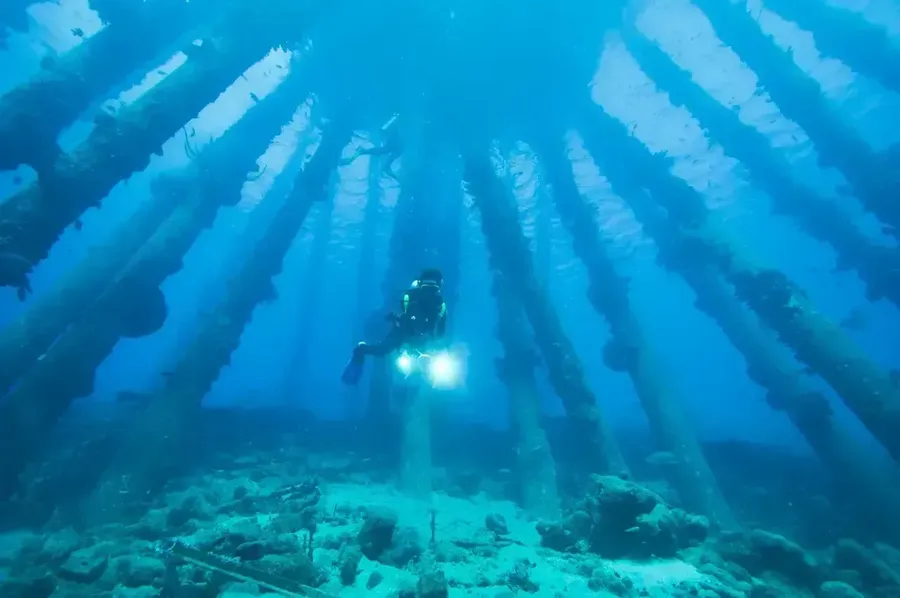
Diving, Bonaire
Sint Eustatius
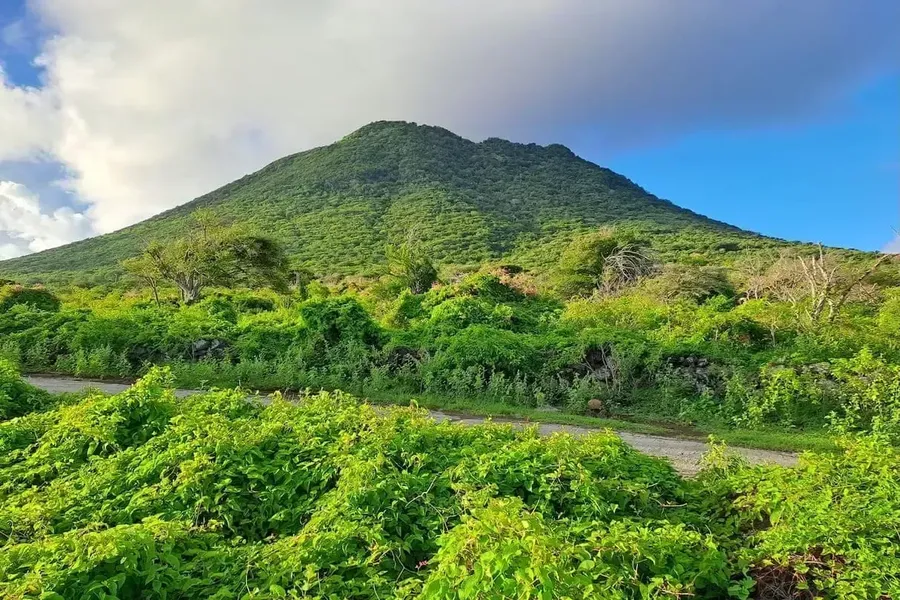
Sint Eustatius, often called Statia, is a small volcanic island in the northeastern Caribbean Netherlands located near Saint Kitts and Nevis. It is known for its dormant volcano, well-preserved historical sites and quiet, undeveloped atmosphere.
Signature characteristics:
- Volcanic landscape dominated by the Quill crater
Saba
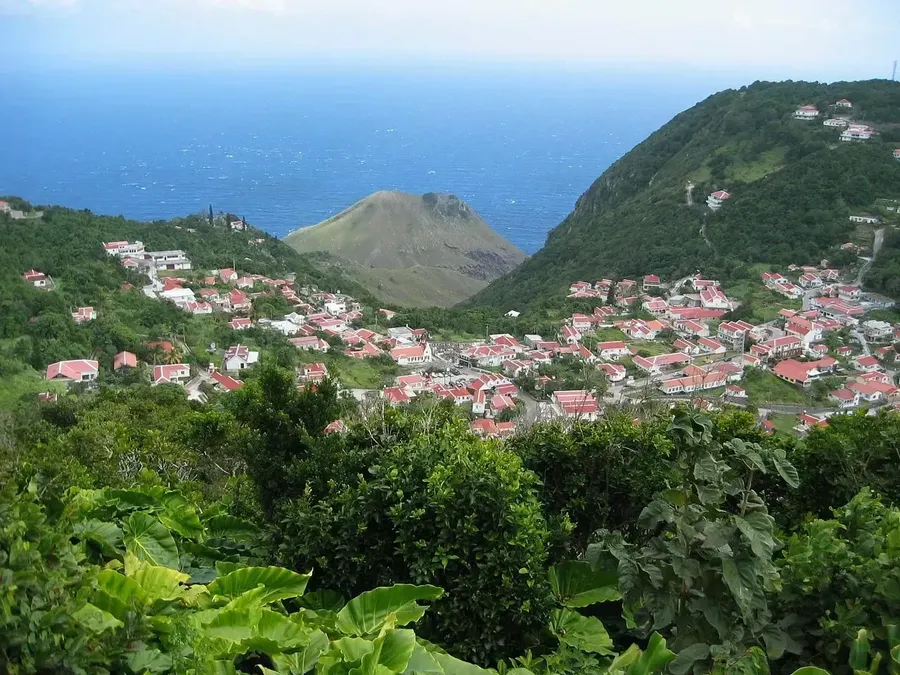
Saba is the smallest island of the Caribbean Netherlands and is located north of Sint Eustatius near Saint Martin. It is known for its steep volcanic terrain dramatic scenery and strong focus on hiking nature and low-impact tourism.
Signature characteristics:
- Steep volcanic island with dramatic landscapes
- Renowned hiking trails and quiet village life
Choose Bonaire for diving, Sint Eustatius for history and nature and Saba for hiking. Many travelers combine two islands in one trip.
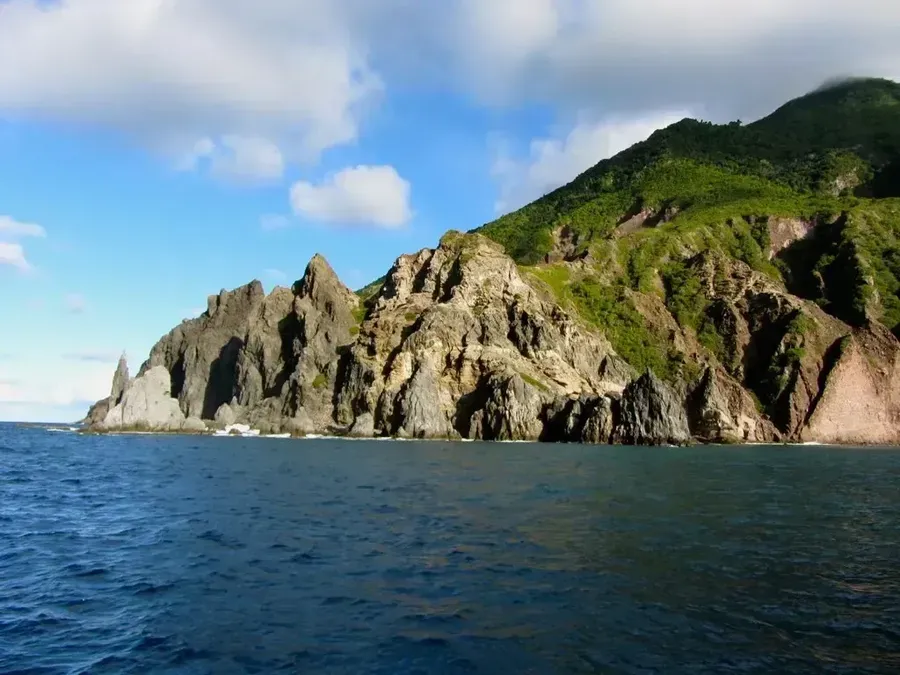
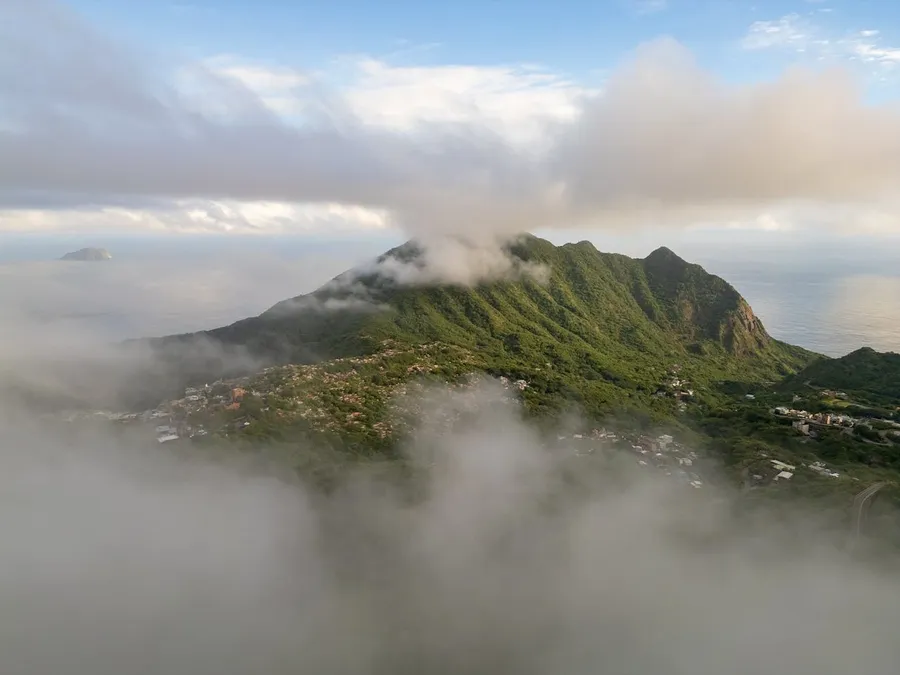
Dramatic landscapes, Saba
Bonaire, Sint Eustatius & Saba comparison
Quick comparison of the three main Caribbean Netherland islands (BES islands).
The Caribbean Netherlands does not have mass tourism infrastructure, which keeps development limited but preserves its natural environment.
Feature | Bonaire | Sint Eustatius | Saba |
|---|---|---|---|
Population | ~26,500 | ~3,200 | ~2,200 |
Landscape | Dry terrain, coral reefs | Volcanic slopes, historic sites | Steep volcanic terrain, cliffs |
Nightlife | Very limited | Almost none | Almost none |
Food scene | Casual dining, local and international | Small local restaurants | Very small local options |
Resorts | Small resorts and boutique hotels | Very limited accommodation | No resorts, small hotels only |
Prices | Mid-range | Mid-range to high | High relative to size |
Getting around | Car or scooter recommended | Car recommended | Walking and taxis |
Where to stay in the Caribbean Netherlands
Accommodation in the Caribbean Netherlands is generally small-scale and relaxed with a focus on boutique hotels, guesthouses and locally owned stays. Most visitors base themselves in the main towns where daily services, dining and transport are easily accessible while still maintaining a quiet island atmosphere.
Kralendijk (Bonaire)
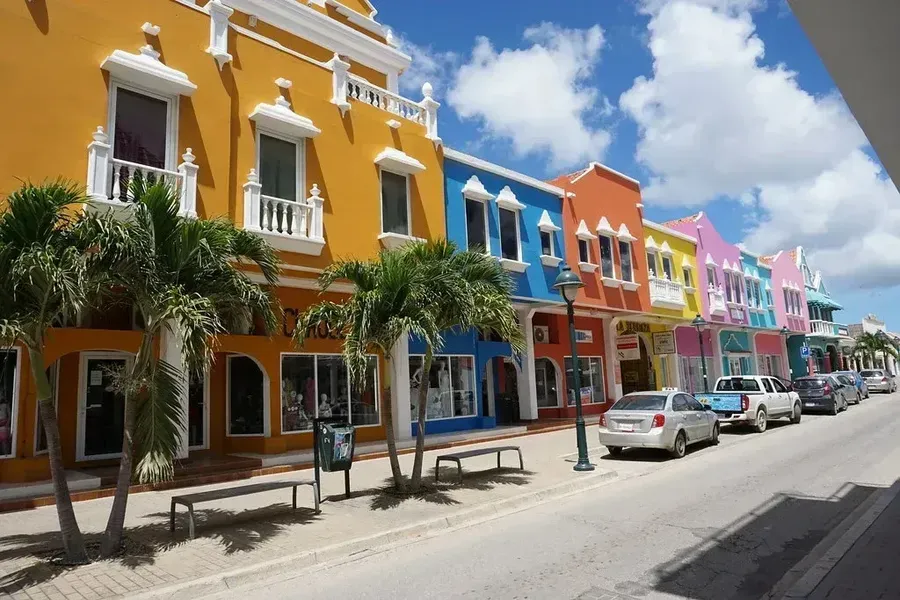
Kralendijk is the main town and primary base on Bonaire. It sits directly along the coast and provides the island’s best access to restaurants, dive centers, shops and essential services making it the most practical place to stay.
Best for: Convenience, relaxed stays, first-time visitors
Why stay here: Walkable coastal town with the widest range of accommodations including small hotels, resorts and apartments
Oranjestad (Sint Eustatius)
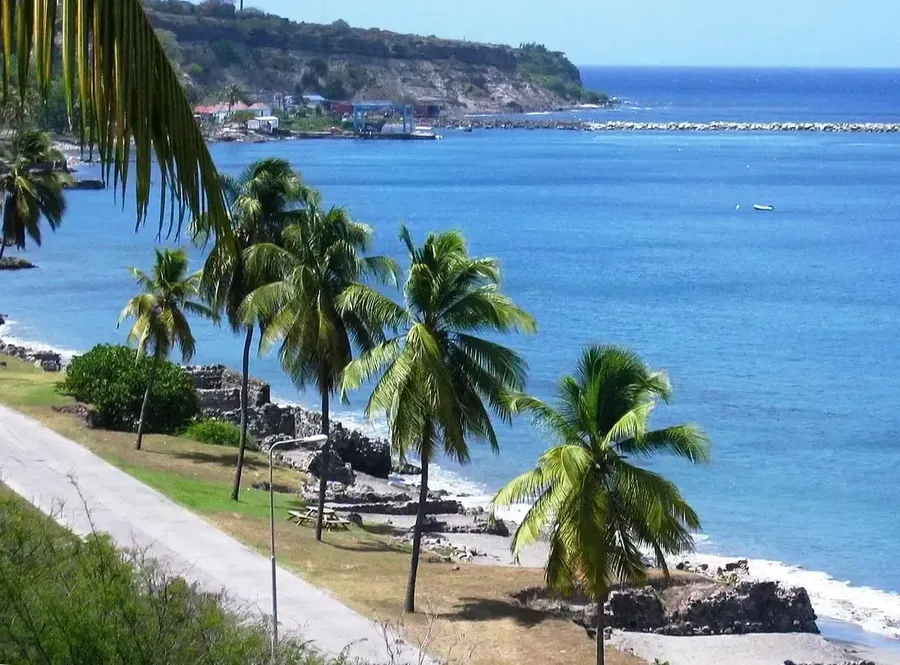
Oranjestad is the main town on Sint Eustatius and the primary base for visitors. It is divided into Upper Town and Lower Town and offers small hotels and guesthouses close to historical sites and the island’s main services.
Best for: Quiet stays, history-focused trips and lowkey travel
Why stay here: Central location near heritage sites with easy access to dining and transport
Windwardside (Saba)
Windwardside is the main village on Saba and the primary place to stay on the island. Located on the slopes of Mount Scenery, it offers small hotels and guesthouses with direct access to hiking trails and local restaurants.
Best for: Hiking-focused trips, quiet stays and nature lovers
Why stay here: Central village setting, cooler temperatures and immediate access to Mount Scenery trails


Best time to visit the Caribbean Netherlands
The Caribbean Netherlands have a warm tropical climate year round with average daytime temperatures between 26 and 30 °C and little variation across seasons.
The best time to visit is from December to April, when conditions are drier with lower humidity and more stable weather. This period is ideal for diving hiking and outdoor activities on Bonaire Sint Eustatius and Saba.
May to July offers fewer crowds and better prices with still favorable conditions, while August to November is wetter and part of the Atlantic hurricane season, requiring more flexibility especially for inter island travel.
Skip the Caribbean Netherlands if you want nightlife, large resorts or family-focused attractions.
Practical information

Currency - US dollar (USD) is used on all three islands.
Language - Dutch is the official language.
Visa - No visa required for stays up to 90 days for citizens of the US, Canada, UK, EU, Australia and many other countries.
Safety - Generally safe with low crime rates. Petty theft can occur in busy areas.
Power - 110 V / 60 Hz with US-style plugs (Type A/B).
Internet - Reliable Wi-Fi in hotels and good mobile coverage on all islands.
Health - No special vaccines required. Basic healthcare is available with more advanced care handled via regional referrals.
Planning tips & itineraries
How long to stay
Seven to ten days works best for visiting one island or combining two. Visiting all three in one trip is possible but often feels rushed due to limited connections.
One island (7 days)
- Bonaire: Seven nights focused on shore diving and relaxed coastal stays
- Saba: Seven nights of hiking, nature and quiet village life
- Sint Eustatius: Seven nights exploring history, volcano trails and marine parks
Two island combinations (10 days)
- Bonaire (6 nights) + Saba (4 nights): Best mix of diving and hiking
- Bonaire (6 nights) + Sint Eustatius (4 nights): Strong blend of diving and history
All three islands (12-14 days)
Fly into Bonaire, continue to Sint Eustatius, then Saba and depart via St. Maarten. This route requires careful planning around limited flight schedules.
Booking tip
For travel between December and April, book flights and accommodation six to nine months in advance. Traveling between May and November offers more flexibility and rates that are often 30 to 50 percent lower.